PMC-san-sang-du-thuoc

Pharmacity

Vietnam’s second-largest retail pharmacy chain

Industry:

Pharmacy

Region:

Vietnam

1,100 0 +

Stores

19 0 M+

Loyalty customers

7,000 0 +

SKUs

Pharmacity is Vietnam’s pioneering modern pharmacy chain with over 1,100 stores, delivering quality medications and a growing range of clinical services.

In Southeast Asian markets like Vietnam, pharmacies serve as the first point of contact for healthcare.

Consumers often choose community drug outlets because they are familiar, have long operating hours, do not require appointments, carry medications to treat most common illnesses and allow the purchase of medicine in small quantities.1

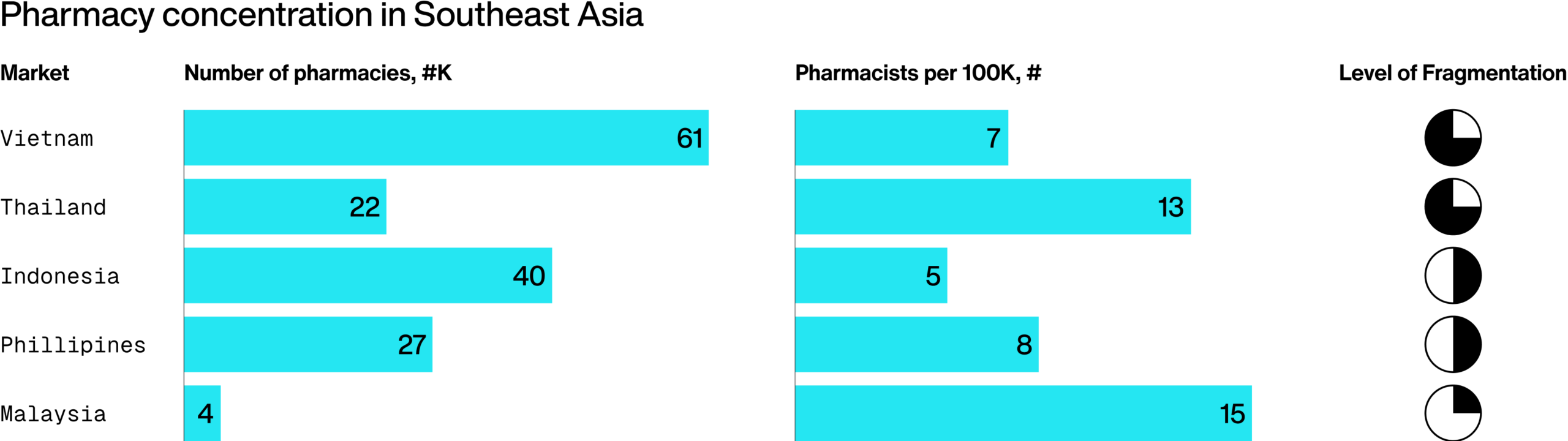
The Vietnamese pharmacy market has grown rapidly to meet this demand but is highly fragmented, with more than 57,000 traditional pharmacies, accounting for around 90% of the country’s pharmacy landscape.2 The majority of outlets are small, independent operations where quality is uneven. This challenge is greater outside of major cities, where access to qualified pharmacists is reduced.3 While Vietnam has one of the highest pharmacy-to-population ratios in Asia, it has one of the lowest concentrations of trained pharmacists.4  

This need for quality advice and products comes amid high rates of antibiotic use and resistance – one of the highest in Asia.5 One third of antibiotics dispensed in Vietnam are considered clinically inappropriate.6 The Ministry of Health (MOH) and Drug Administration of Vietnam (DAV) are actively working to reduce inappropriate antibiotic use and strengthen enforcement around prescription drug dispensing.  

Organised pharmacy chains offer a direct solution: consistent dispensing standards, qualified staff, reliable supply chains, and the health literacy support which may be lacking in independent outlets. But, they remain marginal, accounting for less than 10% of pharmacy stores in Vietnam.2 

The demand-side picture reinforces the urgency. Total healthcare expenditure in Vietnam reached $19.5 billion in 2024, growing at 10% annually – the fastest rate in Southeast Asia. Out-of-pocket expenditure accounts for almost 40% of total healthcare spend, placing the burden of care directly on consumers.7 This growth has been driven by an ageing population, rising rates of non-communicable diseases such as diabetes and cardiovascular conditions, and a middle class projected to represent 40% of the population by 2028. 

pharmacity.2
Source: EY Parthenon.
pharmacity.2
Source: EY Parthenon.

Pharmacity was founded in 2011 and is largely credited with modernising Vietnam’s retail pharmacy sector. 

It is now the country’s second largest pharmacy chain, operating more than 1,100 stores across Vietnam – growth of ~10x since its inception. 

With nearly 19 million loyalty members, a growing digital platform, and expanding services in diagnostics and preventive health, Pharmacity has grown beyond a traditional pharmacy into a broader primary healthcare destination. Qualified pharmacists provide in-store consultations with standardised protocols and verified supply chains that help ensure that the medicines dispensed are genuine, correctly stored, and clinically appropriate. 

The business stocks medicines across over two-thirds of Vietnam’s major disease categories and covers prescription medicines, over-the-counter drugs, health supplements, personal care, and everyday medical supplies. Customers can meet most healthcare needs in a single visit, supported by online ordering, home delivery, and digital prescription services for those who are unable to. 

Pharmacity’s network extends well beyond Vietnam’s major cities, bringing consistent, regulated pharmacy services to Tier 2 and Tier 3 cities that have historically been underserved. As the government moves to raise standards across the sector, Pharmacity’s established compliance practices and early adoption of technology place it in a strong position to grow as independent operators face increasing regulatory pressure. 

Affordability is a core part of the offer. Pharmacity offers a robust range of own-brand products, providing lower-cost alternatives to branded products for cost-conscious consumers. 

Pharmacity’s model is built around serving the customer well. More than a decade after its founding, the brand continues to be recognised for its customer service, product range, and value proposition, receiving multiple industry accolades.  

pharmacity.3
Source: Company data, 2026.
pharmacity.3
Source: Company data, 2026.

LeapFrog brings direct and relevant experience to Pharmacity, having supported Goodlife Pharmacy through its full lifecycle to exit. 

The team has a proven playbook in retail pharmacy and is well positioned to replicate that success in Southeast Asia, a region with similar fundamentals: fast-growing, highly fragmented, with pharmacies playing a frontline role in everyday healthcare. 

LeapFrog will work closely with Pharmacity’s management team to accelerate growth and deepen impact. A central focus will be supporting Pharmacity’s evolution from pharmacy retailer into a holistic health hub – expanding the product range and introducing complementary services that better serve customers’ everyday healthcare needs. This will be complemented by hands-on operational support across digital, customer experience and talent.  

Pharmacity has committed to LeapFrog’s Responsible Investment Code and Environmental and Social Management System. LeapFrog will apply its proprietary impact measurement approach to estimate the number of disability-adjusted life years (DALYs) avoided through Pharmacity’s operations, tracking outcomes across its customer base of emerging consumers and underserved regional populations. 

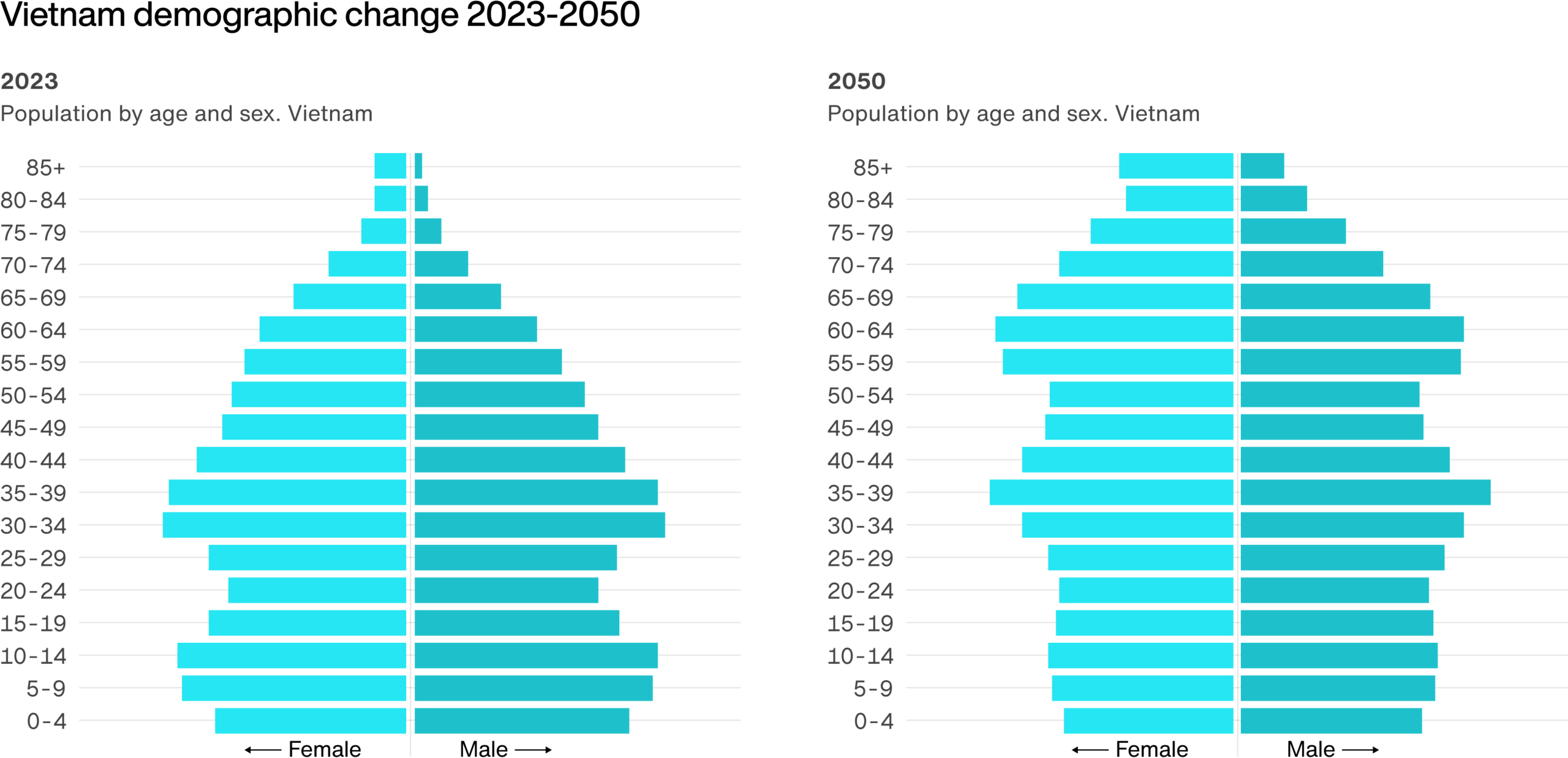
Vietnam is one of the fastest-ageing societies in the world – within a decade, more than one in five Vietnamese citizens will be aged over 60, rising to over 25% of the population by 2050.8 This trend will drive sustained demand for the accessible, quality primary healthcare that Pharmacity was built to provide. 

8 UNFPA, Population ageing in Vietnam, February 2026| Page last updated May 2026.

pharmacity.5
Source: WHO, 2026.
pharmacity.5
Source: WHO, 2026.